
Kadasha Hershey served not just one but two year-long terms as a Systems Change AmeriCorps VISTA at Community Opportunity Alliance before joining their staff as a Program Associate. She helps coordinate capacity building programs and membership operations, including support for several projects that she started during her service.
“A lot of what I’m working on now has flowed very naturally from my VISTA service, and I’ve been able to see through the completion of multiple projects,” says Kadasha. “I’ve been able to begin things as a VISTA, end things as a Program Associate, and now am looking into the future and seeing how we’re going to continue these services, programs, and strategies.”
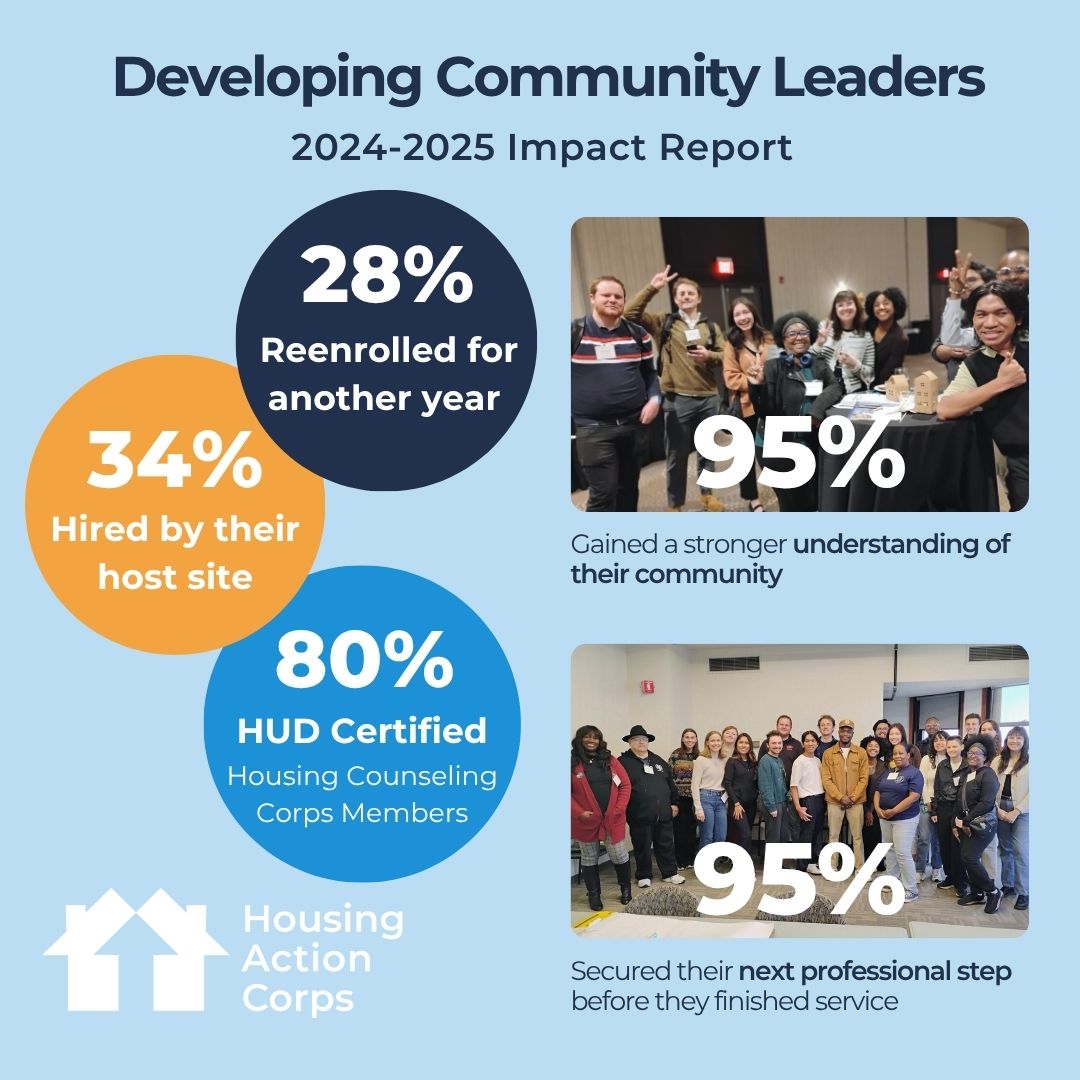
AmeriCorps members take many different paths when they finish their terms of service, from continued national service to graduate school or traditional employment. Kadasha Hershey, Paul Panciera, and Rae Lindow—and 34% of our 2024-2025 Housing Action Corps cohort—are continuing their professional development at their host sites after accepting full-time staff positions. We caught up with these three recent alumni to learn more about their experiences during service and their new staff roles.
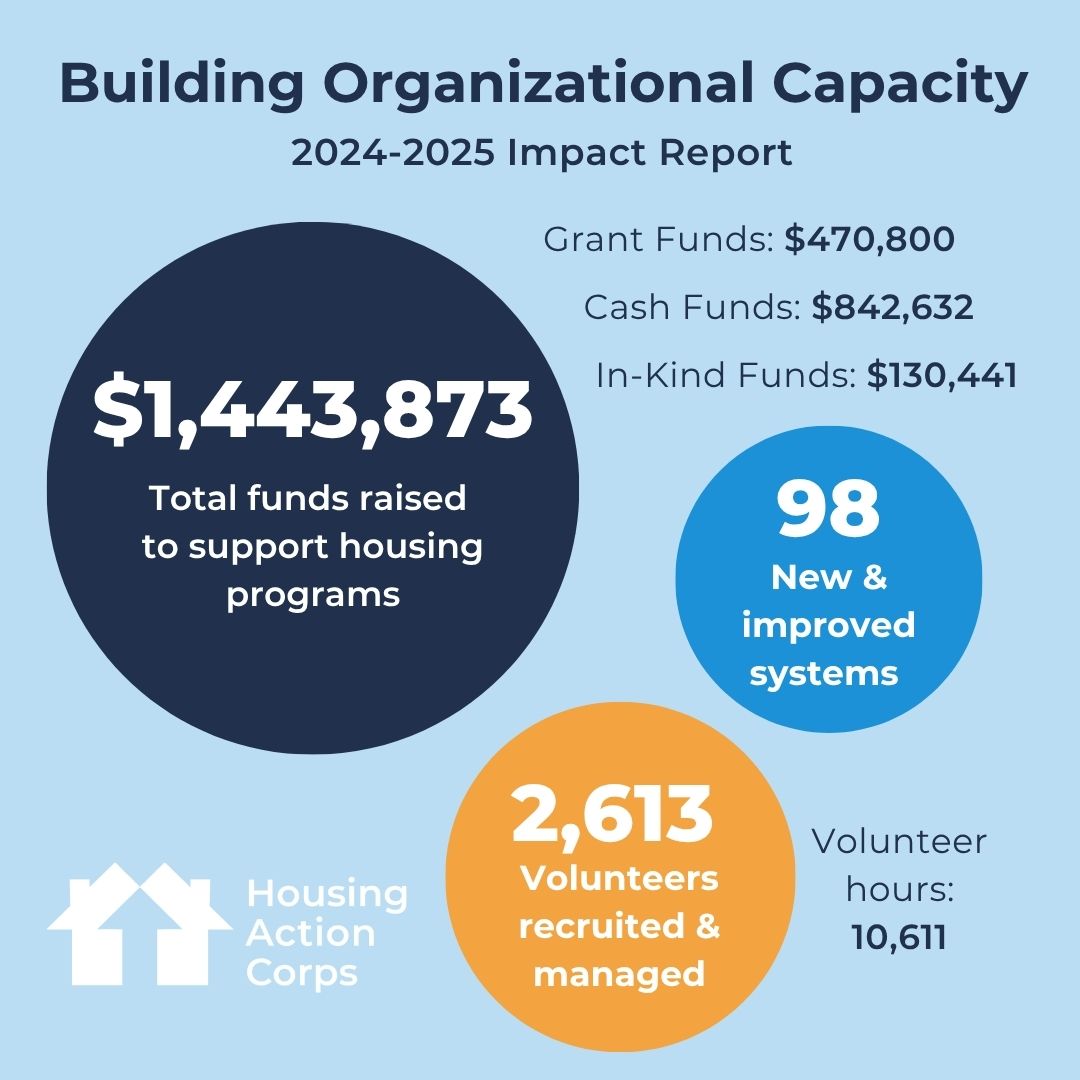
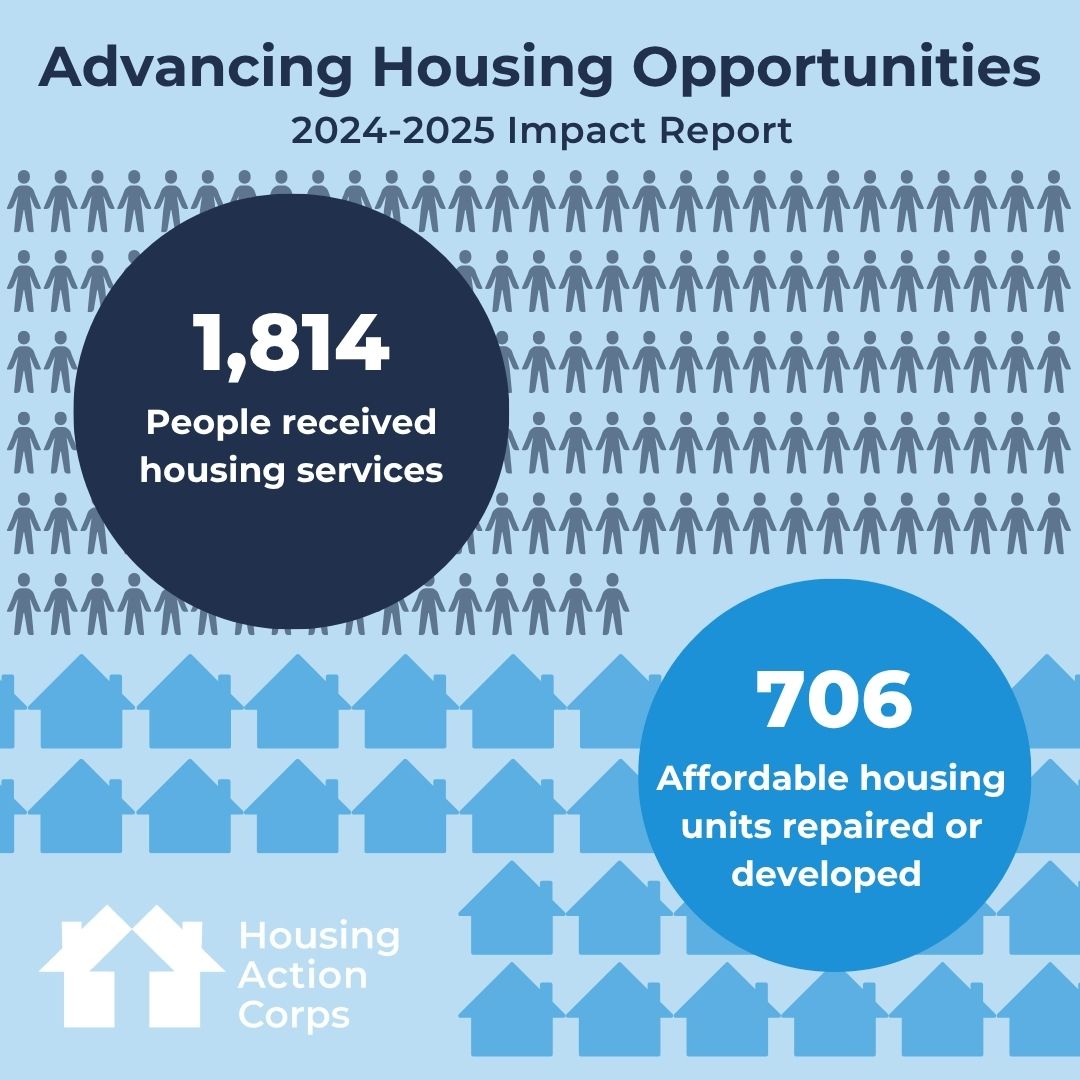
From summer 2024 to fall 2025, our Housing Action Corps network connected 32 AmeriCorps VISTA members with 26 host organizations throughout Illinois, as well as in 4 other states through our national Housing Counseling Corps initiative. During a year of full-time service, our AmeriCorps members take on projects that help strengthen and sustain their organizations to meet the changing needs of their communities. In exchange for their service, Housing Action Corps members receive the benefits of the AmeriCorps VISTA program, as well as tailored professional development opportunities to launch a career in the housing field.
After witnessing the housing crisis in Vancouver Island while attending college, Paul Panciera applied for a Chicago-area position with Housing Action Corps to learn about housing development firsthand and start a career in the field.
“AmeriCorps was perfectly aligned with my future goals, and I got the exact experience out of it that I could have hoped for,” Paul says. “I knew that I wanted to get into housing after college, but I didn’t necessarily have the background for it as a political science major….AmeriCorps could help me get that foot in the door, while also serving my community.”
As an Affordable Housing Development VISTA, Paul helped coordinate the closing of an 81-unit mixed-use development in South Chicago, a project Claretian Associates has been working on since 2009. This development is being constructed on one of several vacant parcels of land lining a commercial corridor that the organization is planning to develop and rehabilitate. After completing his year of service, Paul accepted an offer as a Corridor Manager, where he is excited to continue supporting the development of this commercial corridor.
“It’s one thing to study housing from the policy side, but it’s another to actually be the one doing the development yourself. You end up learning a lot more about how development actually works,” reflects Paul. “One of the things that made staying at Claretian more attractive was this land and the opportunity to shape a whole corridor. You are part of the team that decides the direction of this whole city block.”
After graduating college, Rae Lindow applied for Housing Action Corps to gain professional experience and learn about how communities are built. She had considered national service previously–her parents even met while serving in the Peace Corps–but was drawn to the AmeriCorps VISTA program because of the shorter term commitment (one year rather than two) and ability to apply for specific projects. After serving as an Intake Coordinator VISTA at Open Communities, Rae became an Intake and Communications Specialist.

Rae greets participants at Open Communities’ Walk the Redline event
“This role is almost a continuation of what I was doing before. As an Intake Coordinator VISTA, I built up our intake program. Towards the end of my service, and moving into my current role, I shifted to doing more communications projects, too,” Rae notes. “Open Communities has been very accepting and welcoming. They trusted me to do a lot of work independently and take the lead on projects.”
Rather than direct service, AmeriCorps VISTA members focus on capacity building projects that work behind the scenes to expand their programs, resources, and partnerships. One of Kadasha’s favorite projects from her service was planning a Midwest Convening, which gathered community development leaders from throughout the region in person to share best practices and opportunities to support their work.
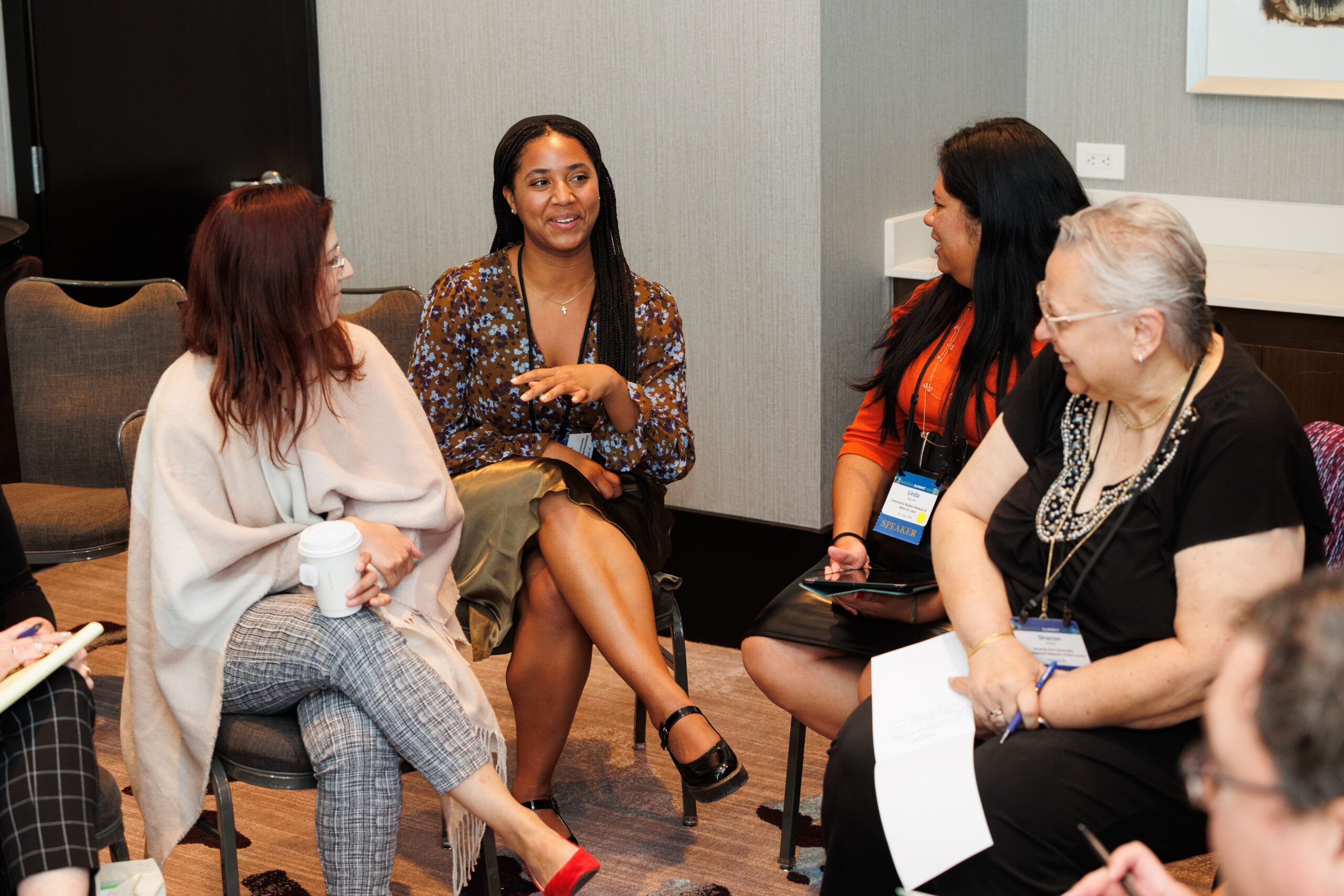
Kadasha speaks with attendees at the Community Opportunity Alliance’s National Summit
“We gathered in St. Louis to share meals and learn from one another, while also getting to see and hear about the local community development landscape,” describes Kadasha. “The relational resilience and the strength of [the community development] sector has been encouraging to observe. It’s very mutually supportive and beneficial–we’re all out to support each other. It really is about relationships at the end of the day.”
Kadasha decided to serve in AmeriCorps after finishing graduate school to build professional experience and explore ways to apply her education in macro social work. While she was already familiar with social programs and systems, her AmeriCorps VISTA position opened her eyes to the field of community development and set her on track for a future career path.
“Community development is the backbone of our communities,” Kadasha reflects. “It’s so impactful to see the work going on in the field and the difference that investing in communities can make. Community development often goes, ‘Look at what this neighborhood could be, if it had the resources and support.’ …It’s the beauty of people seeing the potential of their homes and being able to make these aspirations a reality. They see the beauty already, because it is already there, but they get everyone else to see it and support it as well.”
While Paul chose his Housing Action Corps position with intentions of launching a career in housing, he recommends AmeriCorps service for anyone looking to grow their professional development and explore new fields.
“I would encourage people, particularly if you’re not sure what to do, to try applying to AmeriCorps. You’re going to make connections and you’re going to work in new fields—and you can find what your next career is without even knowing it,” describes Paul. “In AmeriCorps, you get a lot of opportunities for further professional development that people may not think of. I got to take Chicago Rehab Network’s Community Empowerment Workshop Series during service, where I learned housing development tools I use in my role today.”

Paul discusses Claretian Associate’s development projects at a community breakfast
After gaining more experience in community and economic development while at Claretian Associates, Paul hopes to leverage this knowledge into a future career in housing policy.
“Ultimately, I would like to have a policymaker role at the city or state level, reforming some of the laws to make [housing development] easier,” Paul says. “Now having worked on the development side, I have a better understanding of what that means.”
During Rae’s service, she created a comprehensive Intake Manual that outlines how to support people through a variety of housing circumstances, as well as how staff can practice self-care after handling a crisis situation. Serving with Housing Action Corps helped her learn about fair housing issues, as well as housing resources and programs.
“Coming from a different state, and being in a college bubble before, I learned so much moving to Chicago,” Rae recounts. “Each person’s story is completely different. Everyone deals with issues related to their housing–even me–but we don’t talk about it, and there are not enough action plans to help everyone in all situations. I wish more people knew about some of the housing programs that are available, and also that these programs were funded better, so they are more available and accessible to people.”
Rae is currently applying for law school and hopes to pursue a legal and policymaking career, a decision which she attributes to her experiences with fair housing.
“While working my intake position, I refer so many people to legal aid, for issues small and big,” says Rae. “I see law as a way of doing both direct service, but also working on bigger issues at the same time. While I may start out working 1:1 with people, I think it is so pivotal to expand access for people, so I would want to work on that side of things too.”
When asked what advice Kadasha has for those who are considering AmeriCorps service, she had an immediate answer: “Just go for it.”
“AmeriCorps is a great way to see where your passions and skills lie, and how those match up with the work you want to do,” Kadasha describes. “If you are interested in what equitable housing and equitable opportunities for entrepreneurship, food access, parks, creative placemaking–if you’re interested in what these organizations are doing to brighten and support their communities, then Housing Action Corps is a great way to get introduced to this work and to find others who are also interested and passionate about this work too.”
About Housing Action Corps
From launching new programs to growing volunteers and donors, Housing Action Corps members spend a year of service helping their host sites enhance their services, resources, and partnerships to meet community needs in new ways.
Applications to host AmeriCorps VISTA members with Housing Action Corps in 2026-2027 will close on January 31, 2026. Members will serve full-time with organizations in our coalition from September 2026 to September 2027.
Learn more about serving as a Housing Action Corps member or becoming a 26-27 host site »