
One of the first things that Sarah Leys did after joining the City of Rockford as Director of Community and Economic Development was engage in a 15-month-long stakeholder engagement process in partnership with HUD consultants. “We wrote and adopted the city’s first housing strategy framework,” Sarah recalls, “which reset the conversation and put affordable housing in the conversation with all of the housing, because it didn’t need to be separated off. We started thinking of why it affects the whole community, and why it needs to be part of every conversation, not just those specifically about affordable housing.”
Looking forward, she hopes to continue to amplify all Rockford residents’ voices. “I believe this year we’ll be able to offer four or five different housing programs…I’m hopeful that our initiatives will address multiple wards at the same time. We’ve done so much work to bring people to the table, I think we’re going to be able to do some programs we’ve never done before.”
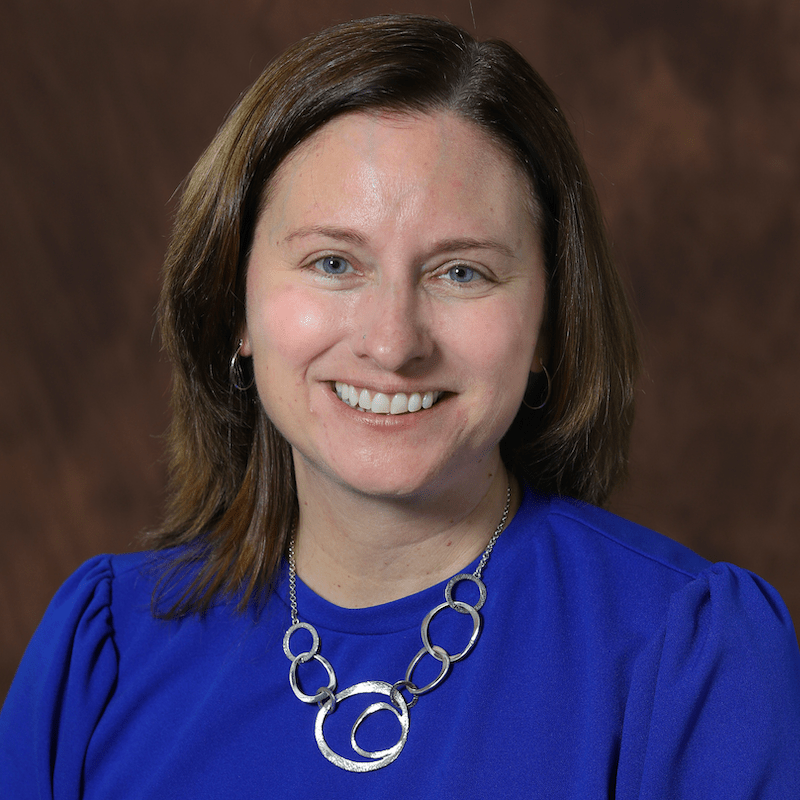
Sarah Leys, Director of Community and Economic Development for the City of Rockford
Her commitment to listening to the needs and opinions of others was born out of her own personal experiences. After initially working at a bank, “I became a mom, and had three kids pretty close together, so I ended up home full time with them. My perspective just changed. I realized what it’s like to be a parent and trying to keep things good for your kids and what the community needs to be for that.” Sarah adds, “I saw how hard it was for housing to happen for moms. Housing was a big reason I had to make certain decisions, because I just didn’t have a choice.”
This experience pushed Sarah to spend time working for Habitat for Humanity and then Home Start. These experiences showed her that her concerns about housing were shared by many people throughout the community. “Seeing what happened when the families found stability shaped my viewpoint. There was one Habitat owner that had three boys, and in the 15 years she was an owner they all graduated, went to college, one got a Master’s, two got doctorates,” she remembers. “The stability of her being able to be home at night because she only needed one job to pay for that house had really changed what her kids were able to do. That impact has always stuck with me.”
On her transition from nonprofit leadership to government work, Sarah says, “[As a non-profit leader] you’re managing the board and the audience, and if you’re in-between you have to pick your mission, and then you zero in on that. You really go after the funding to do your part.” It’s different from working for the city, she reflects, because “The government makes a lot of the decisions about bringing stakeholders together, or thinking about the foundational funding, some of the underwriting. There’s a lot that’s influenced about the housing discussion that I couldn’t do from a nonprofit lens. I’m working directly with our local decision makers. I have direct relationships with the city council, the mayor, city administrator, the other regional government [initiatives] I’m involved in. I still have all my nonprofit partners, and I try to [collaborate with] as many as I can.” Sarah’s experiences with nonprofits have allowed her to approach her government role with a deeper awareness of how the two entities can work together to solve housing issues.
This perspective will also be valuable to Housing Action’s board. “Given where funding and decisions are going, local governments are becoming more and more important. For years, there’s [been] enough federal money for this and that, but as this administration dries that up and resets whole offices, the funding picture really changes federally. We have to make sure our local and state are built correctly to hold the foundation for the long term.”
When asked why she joined Housing Action’s Board of Directors, she replies, “I joined the board because I love the organization, but also because I think having a government representative will help shape any new [directions Housing Action may have to take].”
We are excited to work with Sarah in the coming years and look forward to her insights.