
“People are struggling and they just don’t know where to go. Even just to call someone and have them sort through various issues and identify resources gives people some stability or hope,” Sarah Delgado, Director of Housing Counseling and Education at Open Communities, explains. People who find guidance and help at Open Communities come from North and West Cook County, and the fair housing and housing counseling organization supports them as they navigate homeownership, renting, and any discrimination struggles they may face.
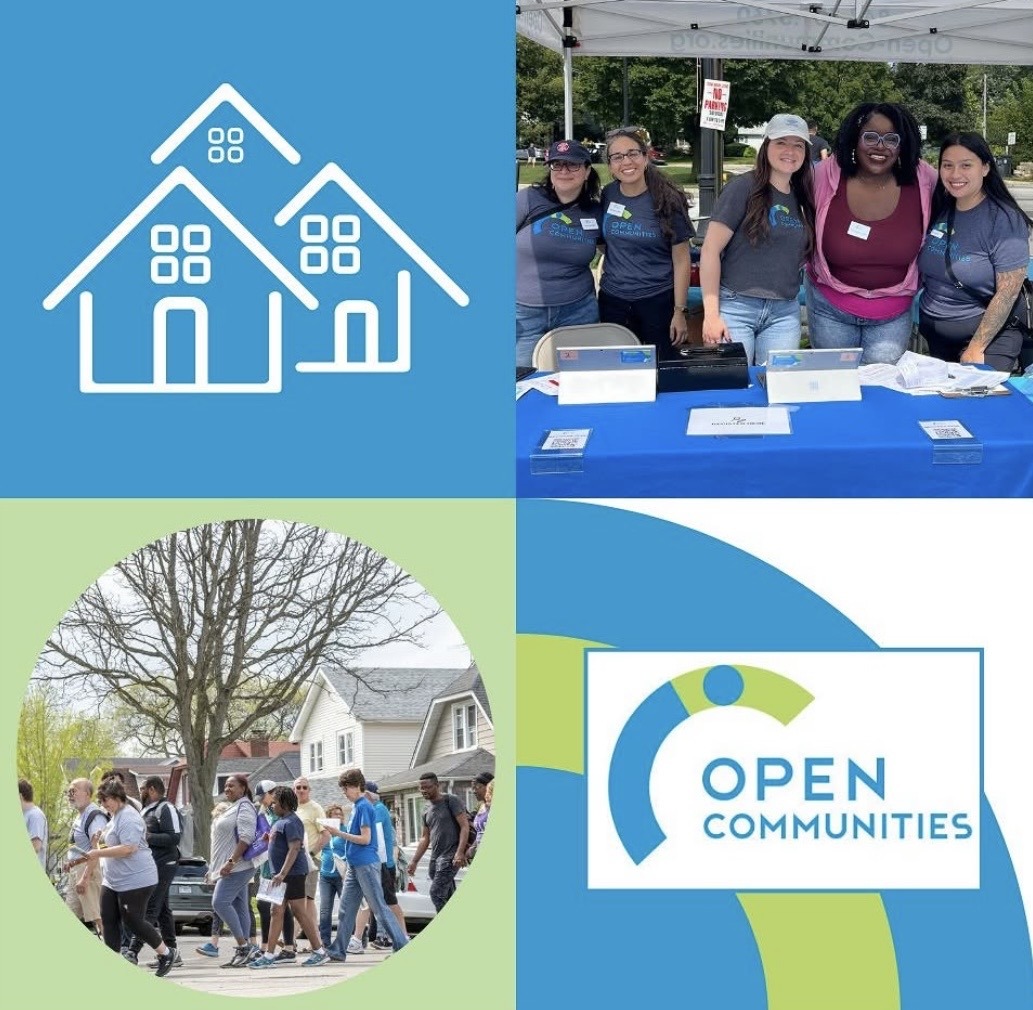
Open Communities offers both fair housing and housing counseling programming, which equips Open Communities’ staff to solve a wider range of problems their clients may be facing. “When folks call and they’re experiencing housing instability or a crisis, from their perspective it’s just a crisis and they need help. They don’t know the delineation [between programs] so it’s great to have both in one agency.” It has also given Sarah a unique perspective on the problems her clients face. “There are so many issues for folks that present as either an affordability issue or a credit issue that is preventing them from getting into housing…but if you have a fair housing lens, you can ask about patterns,” Sarah says. “Are there patterns with a particular housing provider? You can work on their individual goals and at the same time ask the broader systemic questions that may be affecting their ability to access the housing they want to live in.”
Sarah wishes that more people would take advantage of the services Open Communities and similar organizations offer–and reach out for help earlier. “You can just call for resources. You don’t have to know exactly what you need. You don’t need to be in crisis to call. I really wish people would come to us before they’re a year in default. If they’re worried about being able to afford their mortgage, talk to us now.” To help make more people aware of their services, Open Communities has been “talking to social workers in municipal government offices, in the tax assessor’s office, where people are already at when they’re struggling with a housing issue.” “They don’t have all the answers either,” Sarah explains. “So making them aware of our services and just continually showing up where people are already at is important to make sure more people get the help they need.”
Open Communities is also expanding their programs and outreach to support the aging populations in their area. “We are trying to reach out to people before they need subsidized housing to see if there’s a way, if they want, for them to age in place or age in their community.” In addition to letting more people know about their services, they are also pursuing partnerships with other organizations. “Aging in place means a lot of different things to different people,” Sarah explains. “There are all kinds of services people may need as they age. We’re learning from the community what those needs are and trying to find partners so that when we do our budgeting or foreclosure or mortgage education workshops, we also have another partner to talk about in-home care, chore services, to talk about all these other kinds of wraparound services.”
Sarah and other Open Communities’ staff members see the value in cultivating relationships with clients over long periods of time. Most pre-purchase clients “are not going to be mortgage-ready within the next year and that’s fine…Our housing counselors sometimes have stayed with clients for years. It’s very unusual for a social service to be there for years to go through the whole process with someone, to really build a rapport and be a resource for people.”
To help people stay engaged, Open Communities’ housing counselors work to meet clients where they are at and highlight the progress they are making even if they can’t reach their goal immediately. “The best way to retain folks is that you have both short-term and long-term goals, as well as just maintaining a regular meet-up schedule and checking in.”
However, it is still challenging to work through difficult life circumstances. “If you’re making progress on your goals and then you have a medical emergency or your car breaks down and it derails your goals, sometimes it’s hard for people to feel encouraged and get back on track.” Sarah and other staff at Open Communities deeply value the strength of their relationships with their clients, which helps to support them through setbacks. “It’s not just about the number of clients we have, but the real care and time that we spend with them. That can make a really big difference, especially in communities with a lot of older adults, or where folks are really isolated and they don’t have a community safety net to make sure that things are going well with them.”
Open Communities is dedicated to continuing their programs and spreading awareness about housing counseling through the challenges their organization and community members may face. Sarah hopes that seeking counseling will eventually become commonplace for potential homebuyers. “The expectation that educating yourself, like driver’s education, is something that you need before buying a home, and that it should be appropriately valued and funded as well; that would be my long term ideal,” Sarah concludes.